

The supplier model decides what arrives on your dock.
Two quotations for the same diameter can come from two completely different kinds of business. Knowing which one you are buying from tells you whether you are purchasing a material you can rely on, or a material somebody hopes will pass.
Supplier models
Three ways to buy alloy wire.
None of these models is dishonest. They simply produce different answers when something goes wrong, and different amounts of control over the specification you receive.
| Question | Reseller / trading company | Large general-purpose mill | XIANYU ALLOY |
|---|---|---|---|
| Who melts the alloy? | Unknown third party | In-house | In-house — three vacuum melting furnaces |
| Who controls the pass schedule? | The plant they buy from | The mill | Us, on the drawing floor |
| Fine wire ≤ 0.025 mm | Resold if it can be found | Often outside the commercial sweet spot | Routine production work |
| Typical order entry | Whatever stock is on hand | Tonnage-oriented | Sample from 1 kg, small runs from 5 kg |
| Is the conversion fee itemised? | No — a single price | No — a single price | Yes — metal cost and conversion fee on separate lines |
| Toll drawing (customer supplies material) | Not possible | Rarely accepted | Accepted |
| Batch traceability after delivery | Depends on the source plant | Yes | Yes — retained sample per batch |
| Who answers when a batch is questioned? | The original plant, indirectly | The mill | The people who drew it |
In practice
Four things that follow from that model.
Composition is our responsibility, not a hope
Because the alloy is melted here, a composition window can be tightened, adjusted mid-campaign or held for a specific customer heat. A reseller has to take whatever the source plant produces.
Fine diameters are the business, not an inconvenience
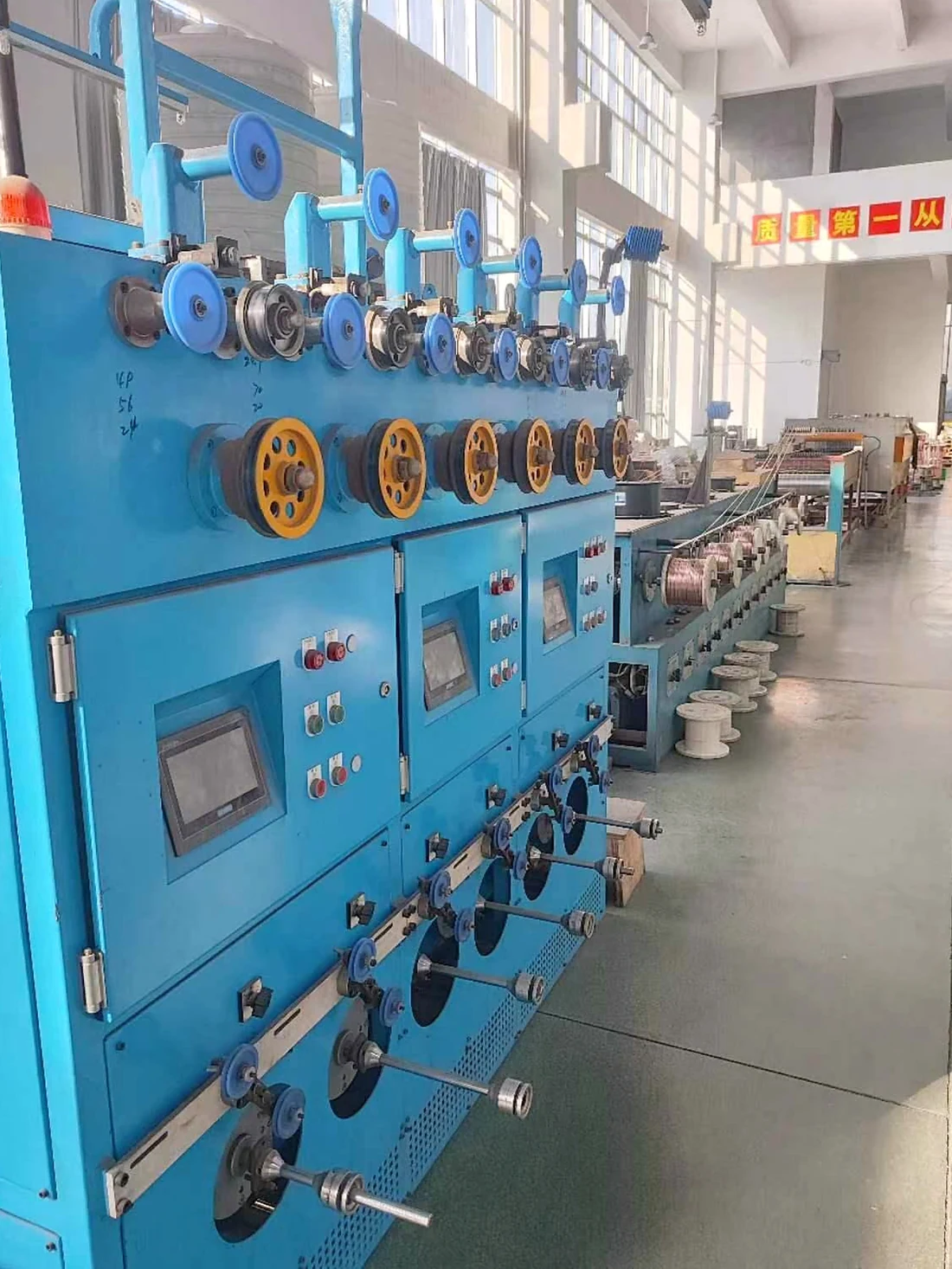
Four of six drawing lines are fine lines. A mill optimised for tonnage has every incentive to steer a small ultra-fine order away; here it is the core of the order book.
You can see what you are paying for
Metal cost and conversion fee are quoted separately. When the nickel price moves, it is obvious which part of the price moved — and when a specification is tightened, it is obvious what the extra process costs.
A trial costs a sample, not a container
Samples from 1 kg, first sample free up to 0.5 kg, and toll drawing if you would rather supply your own material. Qualifying a new supplier should not require a capital commitment.
Straight answers
Where we are the wrong supplier.
A supplier who claims to be best at everything is telling you they have not thought about it. These are the orders we would rather decline than quote badly.
| If this is your priority | Then |
|---|---|
| Lowest possible price on commodity 1 – 6 mm rod, by the tonne | A large mill will beat us. We are not competing on tonnage. |
| A single delivery of many tonnes on a short clock | Capacity runs above 100 tonnes a year — real, but finite. A large mill schedules a multi-tonne order faster. |
| Finished temperature sensors or assembled probes | Outside our scope — we supply the wire that goes into them. |
| Reference-grade calibration certificates issued on site | Arranged through accredited partner laboratories, not in-house. |
| Co-extruded, clad or non-round profile products | Not part of the drawing floor's capability. |
Scroll the table sideways to see all columns.
If your requirement sits in the right-hand column, we will tell you so at enquiry stage and, where we can, point you at the kind of supplier who does it well.
Questions buyers ask
Before you compare our price with someone else's.
Your price is higher than a large mill's. Why?
On commodity gauges it probably is, and it should be — a large mill amortises conversion over tonnage we do not have. The comparison changes as the diameter falls. At 0.05 mm and below, pass counts rise, throughput per hour falls and scrap rises, and a mill set up for tonnage is not organised to run it profitably.
The fair test is to compare delivered cost per metre of usable wire, not price per kilogram. Breakage and out-of-tolerance rejects on the customer's line are part of the cost of cheap fine wire.
How do I know the wire will run on my line?
Take a sample first. We send 1 kg — first sample free of charge up to 0.5 kg with the freight at cost — together with a sample card recording the grade, diameter, batch number and measured resistance. Run it on your own equipment and compare it against your incoming inspection. Only then convert to a production order.
What if I need a grade that is not on your list?
Send the specification and the application. Between the six families there is usually a grade that will serve, and where there is not, we will say so rather than substitute quietly. Grades outside the list can be evaluated as a development order if the quantity justifies it.
Can I visit the plant or send an inspector?
Yes. Customer visits are welcome with notice, and third-party inspectors can attend the final inspection if the run is scheduled for it. Arrange it before the order is released, otherwise the material may already be packed.
Do you sell into my country directly, or through an agent?
Direct. Enquiries come to the works, the quotation comes from the works, and the batch questions are answered by the people who drew the wire. There is no intermediary layer to route a technical problem through.
Next step
Test the claim with a sample.
Send the grade, diameter and temper you need. We will quote it, and if you want to check us before committing, we will send a sample to run on your line.