

Six alloy families. Round wire from 0.025 mm to 6.00 mm.
Every grade below is drawn on our own lines and supplied in soft, half-hard or hard temper. The tables give the normal supply range — use them to confirm that a requirement is feasible, then send it to us for a quotation and tolerance check.
Diameter capability
How fine we can draw, listed grade by grade.
| Grade / designation | Round wire diameter | Temper | Typical applications |
|---|---|---|---|
| Pure nickel N6 / N4 Ni200 / Ni201 |
0.025 – 6.00 mm | M / Y2 / Y | Heating-element leads, electron and vacuum device leads, electrodes, nickel mesh and woven cloth, corrosion-resistant parts |
| Monel 400 Ni70Cu28 |
0.10 – 6.00 mm | M / Y2 / Y | Corrosion-resistant structural parts, specialty welding wire, marine and nuclear service |
| Constantan 6J40 | 0.05 – 6.00 mm | M | Precision wire-wound resistors, current-sampling resistors, shunts, power resistors |
| Manganin 6J8 / 6J12 / 6J13 | 0.05 – 6.00 mm | M | Standard resistors, precision shunts, measuring elements, ratio bridges |
| Copper-nickel low resistance NC003 – NC050 | 0.05 – 6.00 mm | M | Shunt resistors, wire-wound / cement / power / braking resistors, load banks, low-temperature heating elements |
| Thermocouple wire, types K / E / J / T positive + negative legs |
0.10 – 6.00 mm | M | Thermocouples, temperature probes, mineral-insulated (MI) cable, compensating leads and instrument cable |
Scroll the table sideways to see all columns.
Product line 01
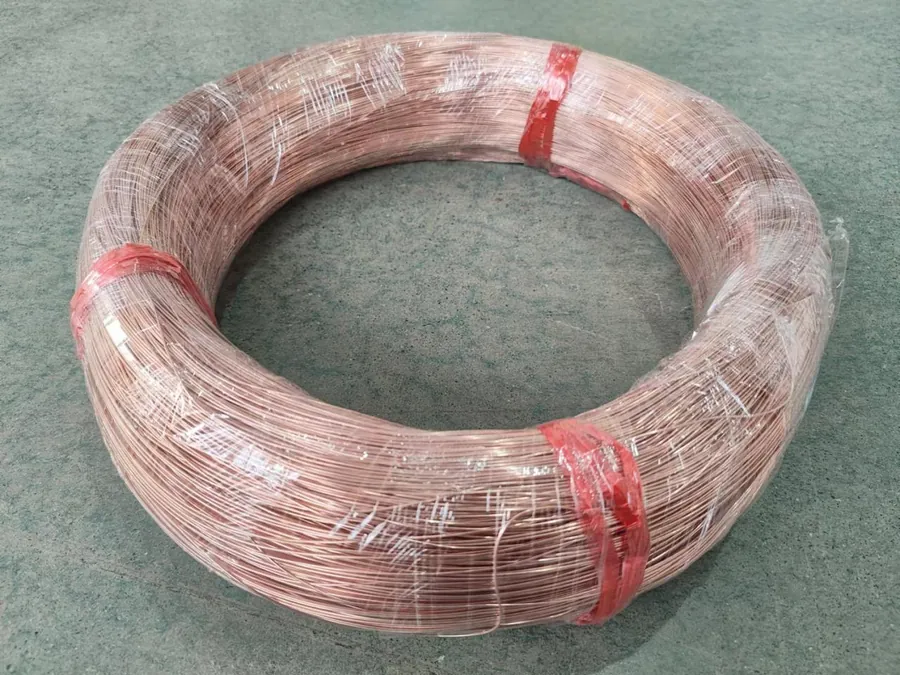
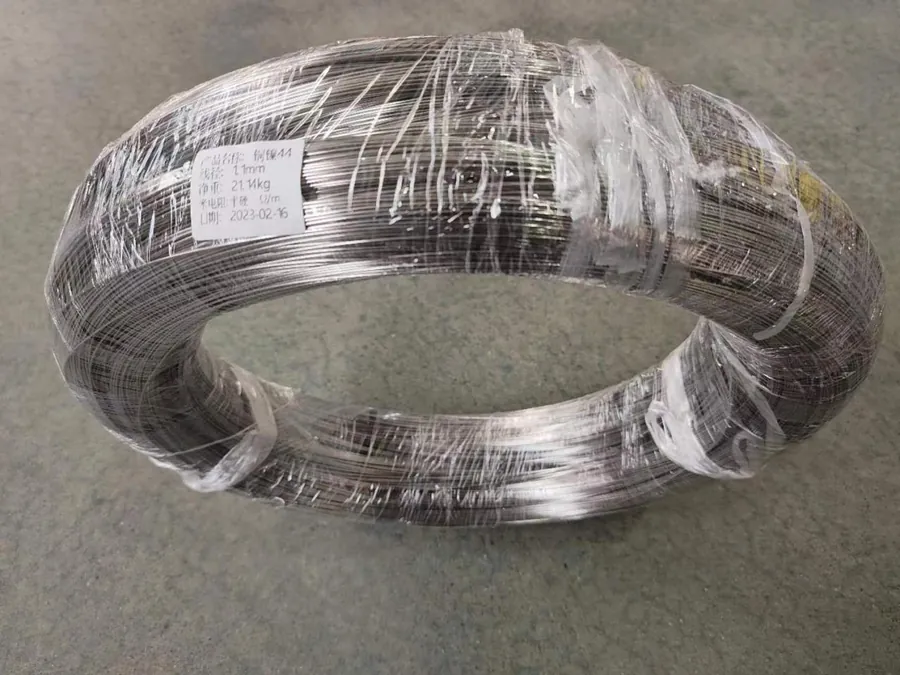
Pure nickel wire — N4 / N6
Low resistivity, good thermal and electrical conductivity, strong resistance to oxidation and corrosion, and easy to weld. Nickel is the standard lead material where an iron or steel lead would oxidise, scale and fail at temperature.
- Heating-element and heating-tube lead wires
- Electron tube, vacuum device and lamp leads
- Electrodes and spark-plug components
- Nickel mesh, woven cloth and battery current collectors
Why the lead matters: a cheaper lead material oxidises, scales and welds unreliably at temperature. Nickel seals well to glass and ceramic and holds its joint strength, which is why we do not offer a downgraded substitute on this line.
Product line 02
Monel 400 wire
A nickel-copper alloy that resists seawater, hydrofluoric acid and alkalis, and keeps its strength at moderate temperature. Selected when corrosion resistance outweighs conductivity.
- Corrosion-resistant structural and fastening wire
- Specialty welding wire for nickel-copper assemblies
- Marine, chemical-processing and nuclear-adjacent service
- Pump, valve and heat-exchanger components
Product line 03
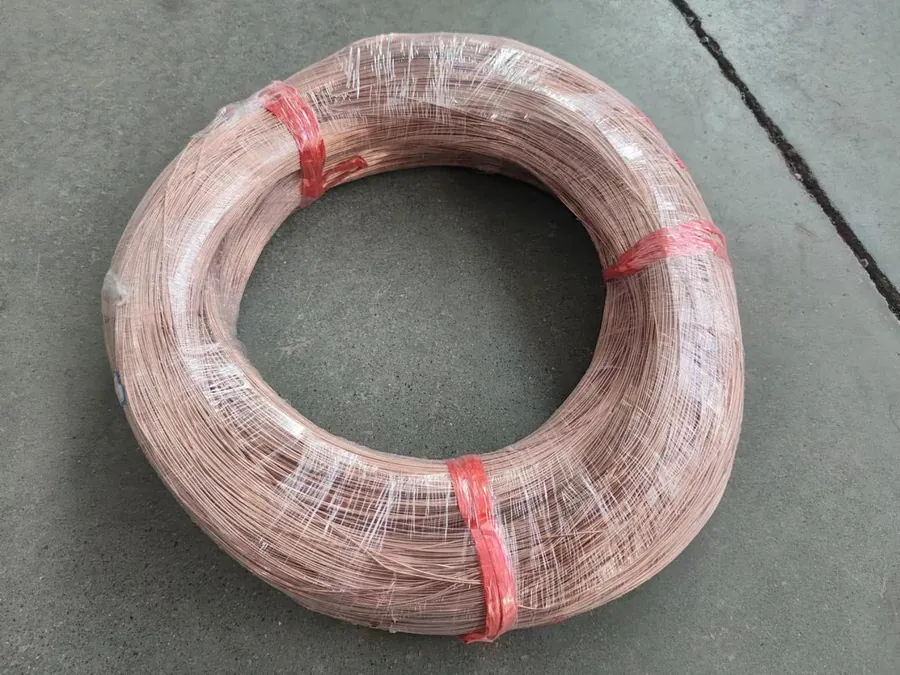
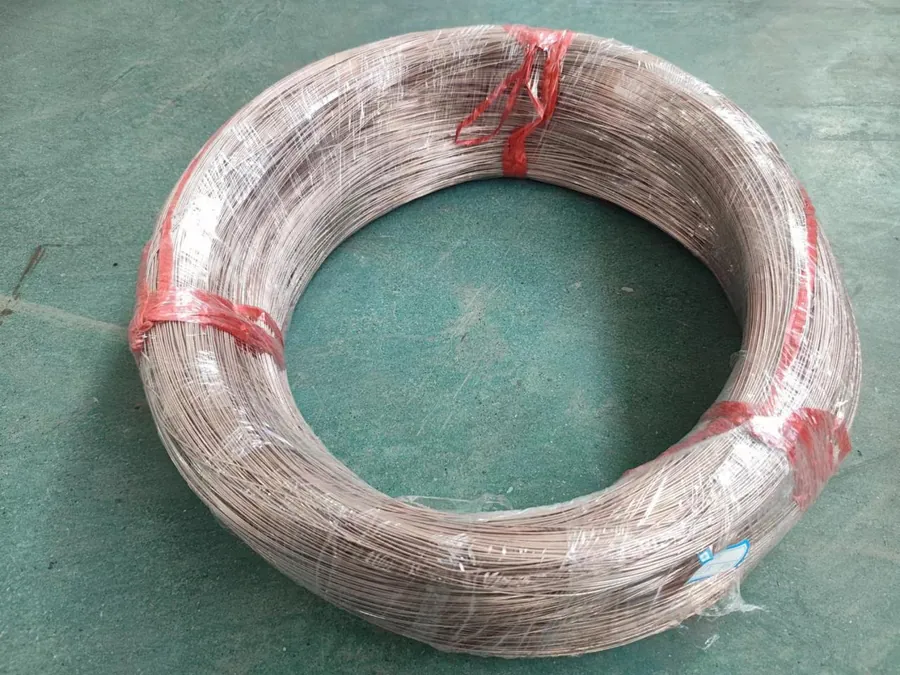
Precision resistance wire — constantan and manganin
The core materials of the precision resistor and shunt industry. Manganin has a low temperature coefficient of resistance and a small thermal EMF against copper, which is why it is used for standard resistors and metering elements. Constantan is more often found in current sampling and wire-wound resistors.
Resistivity is controlled by grade and verified batch by batch. Where a customer requires temperature coefficient of resistance (TCR) and thermal EMF values, these are confirmed per batch against the technical agreement.
Product line 04
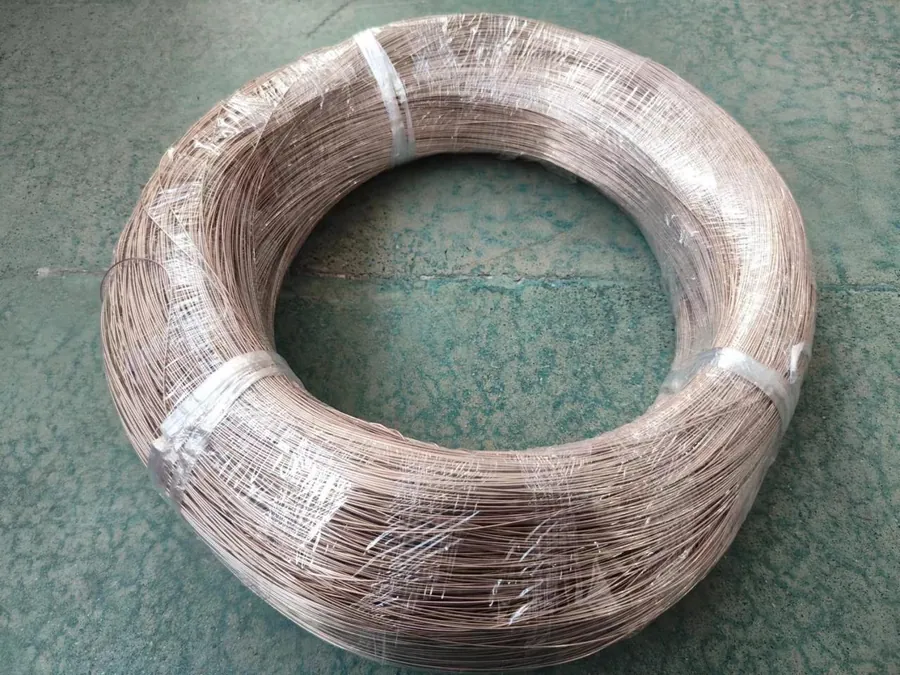
Copper-nickel low resistance wire — NC003 to NC050
A graded series covering resistivities of roughly 0.03 to 0.50 µΩ·m, to GB/T 6454-2008. These grades are the standard material behind shunts, sampling resistors and power resistors: low resistance value, controlled temperature drift and good long-term stability.
- Shunt and sampling resistors for meters, BMS, storage and chargers
- Wire-wound, cement, power and braking resistors
- Load banks and low-temperature heating elements
- Consistent batch behaviour within a grade, so resistance targets hold
Product line 05
Thermocouple wire — types K, E, J and T
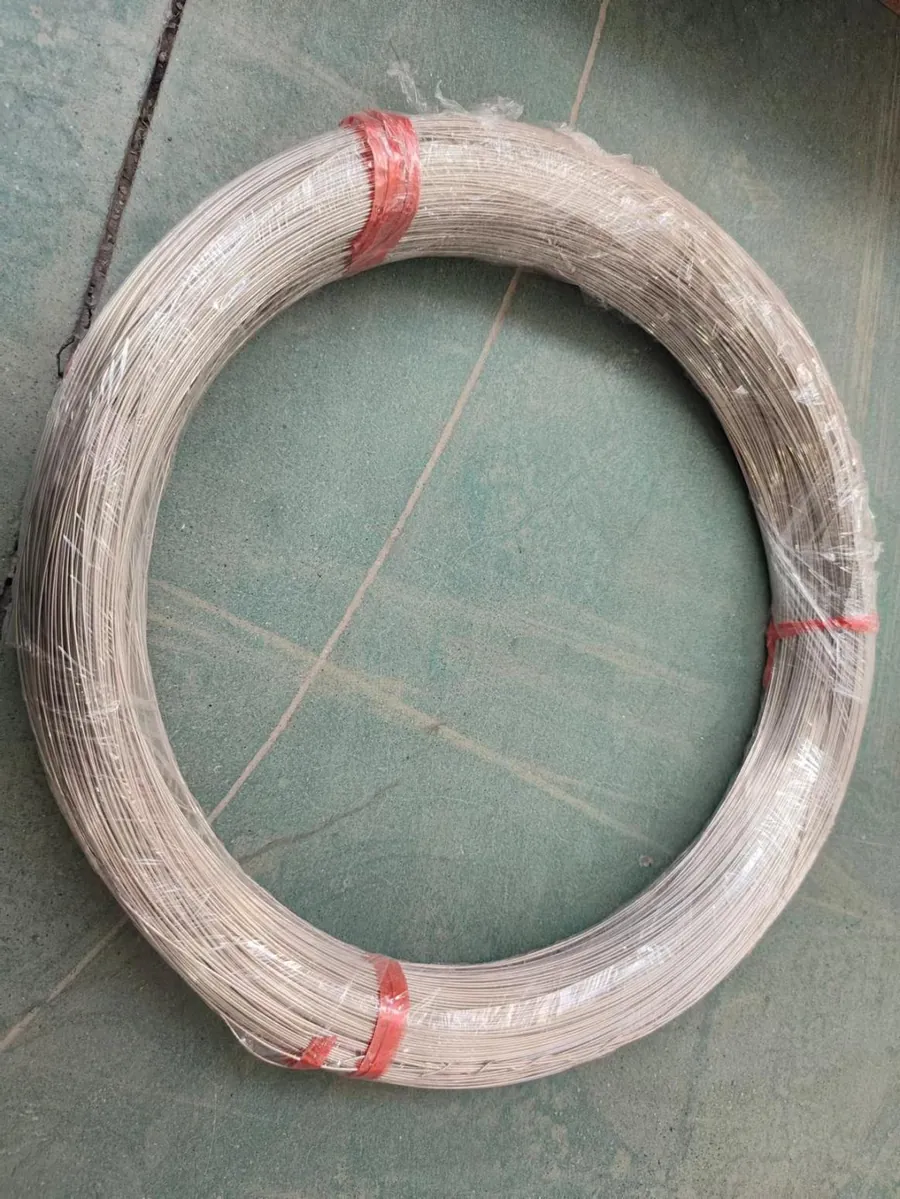
Thermocouple and compensating alloy wire, supplied as a matched positive and negative pair. Both legs of a pair are drawn from the same melt and dispatched together, so a customer is never left pairing spools of unknown provenance.
| Type | Legs | Where it is specified |
|---|---|---|
| K | NiCr — NiSi | The general-purpose industrial type, widest used |
| E | NiCr — constantan | High sensitivity, accurate low-to-mid temperature measurement |
| J | Iron — constantan | Reducing atmospheres, low-to-mid temperature service |
| T | Copper — constantan | Low temperature and the most precise of the four |
- Matched positive/negative legs supplied together
- Thermocouple and temperature-probe manufacture
- Mineral-insulated (MI) cable and sheathed thermocouples
- Compensating leads and instrument cable
Pairing and thermal EMF verification against the applicable reference tables are available per batch. Where a customer requires reference-grade calibration certificates, testing is carried out through an accredited partner laboratory — see Quality & certification.
Grade reference
Grade, standard, diameter, use — on one table.
The international standards in the third column are given as the nearest reference for overseas buyers comparing designations. Formal certification to any named standard is confirmed in writing on the quotation before an order is placed.
| Grade | Chinese national standard | Nearest international reference | Diameter |
|---|---|---|---|
| 6J40 (constantan) | GB/T 6145-2010 |
ASTM B267 · IEC 60115 series | 0.05 – 6.00 mm |
| 6J8 / 6J12 / 6J13 (manganin) | GB/T 6145-2010 |
ASTM B267 · IEC 60115 series | 0.05 – 6.00 mm |
| NC003 – NC050 | GB/T 6454-2008 |
Comparable resistance-alloy specifications | 0.05 – 6.00 mm |
| N6 (Ni200) / N4 (Ni201) | GB/T 5235-2021 compositionGB/T 21653-2008 mechanical |
ASTM B160 | 0.025 – 6.00 mm |
| Monel 400 (Ni70Cu28) | Supplier specification | ASTM B164 · NACE MR0175 by arrangement | 0.10 – 6.00 mm |
| Types K / E / J / T | GB/T 2614-1998GB/T 4993 / 4994-1998GB/T 2903-1998 |
IEC 60584-1 · ASTM E230 | 0.10 – 6.00 mm |
Scroll the table sideways to see all columns.
Temper
Three supply conditions.
Soft / annealed
Maximum ductility. Easiest to wind, braid and form. The default condition for winding, meshes and most resistance elements.
Half-hard
A compromise between strength and formability, for parts that need some stiffness but still have to be bent or wound.
Hard / as-drawn
Highest tensile strength and spring. Used for structural wire, electrodes and applications where the wire must hold its own shape.
Quotation
Found your grade? Send the diameter, temper and quantity.
Quotations show metal cost and conversion fee on separate lines. If you would rather try before you buy, ask for a sample — first samples from 1 kg, with the grade, diameter, batch number and measured resistance on the sample card.