

Three entry points
Sample, trial, then production.
There is no container minimum. We would rather draw a small lot and let you test it than ask you to commit before you have seen the wire.
Sample - 100 g, supplied at cost
A 100 g sample is supplied at cost: you pay for the wire and the freight. Enough to wind a test coil, build a probe or run a trial joint, and every sample is drawn from the same lines as production.
Trial order - from 5 kg
Priced at production rates, so the trial tells you what the real part will cost as well as how it behaves. Same lead time as production: 3 to 7 days on standard specifications.
Production - quantity pricing
Once the specification is fixed in writing, production quantities are quoted against grade and quantity. The specification agreed at sample stage is the specification that ships.
What comes with a sample
You should not have to spend money finding out what you were sent.
A sample is only useful if you can trust the label on it. Every sample leaves with the same identification as a production batch, so what you test on the bench is what you can order.
- Grade and designation, exactly as quoted
- Diameter and the tolerance window applied
- Temper condition (M / Y2 / Y)
- Batch number, traceable to the retained sample
- Measured resistance per unit length on request
- Material test certificate on request, at sample stage
Why the sample is charged. A sample is a test, not a stock position. The 100 g sample is supplied at cost - you pay for the wire and the freight - and it is drawn from the same lines as a production order, so what you test on the bench is what you can buy. Keep it small and it stays fast.
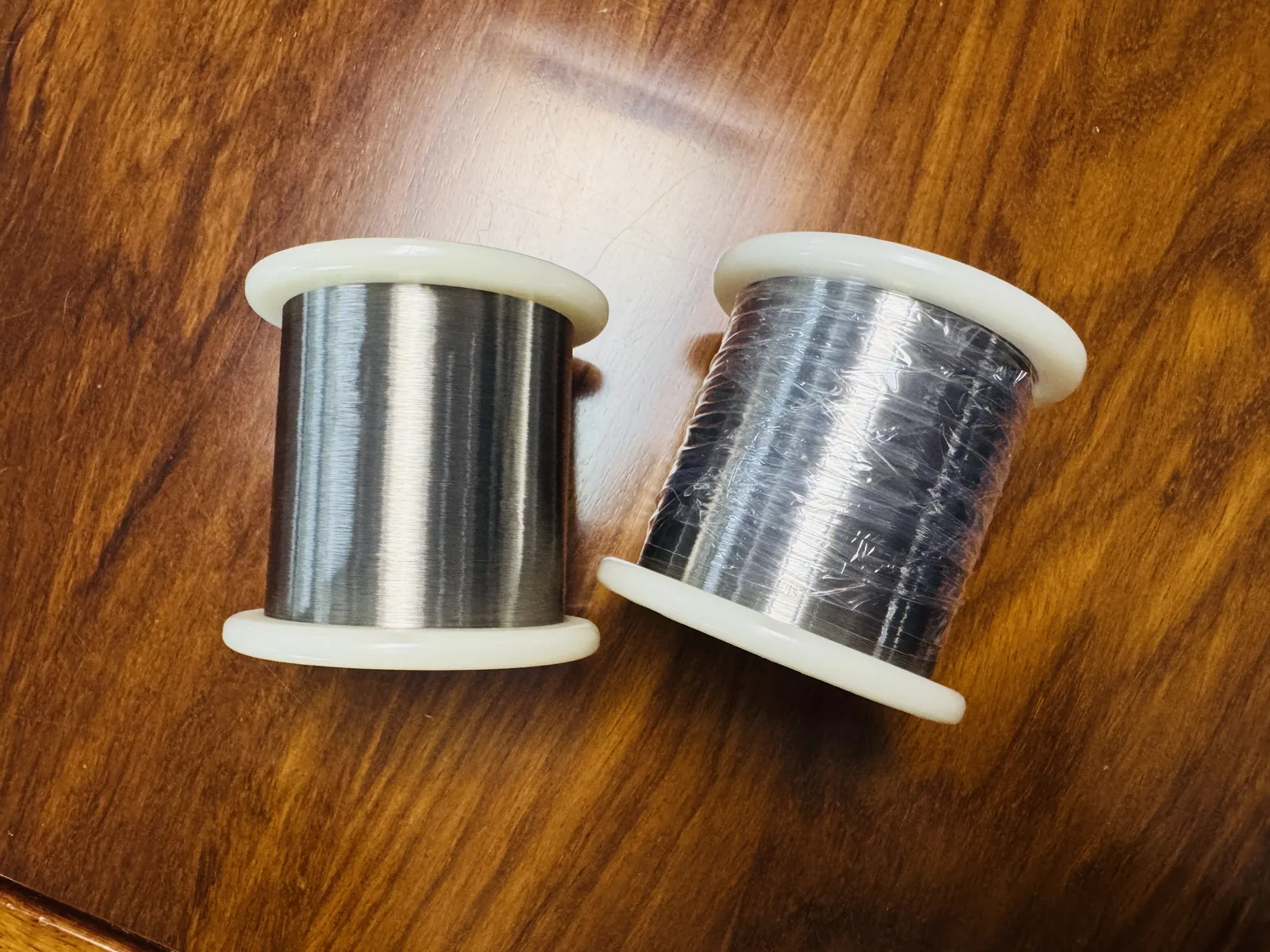
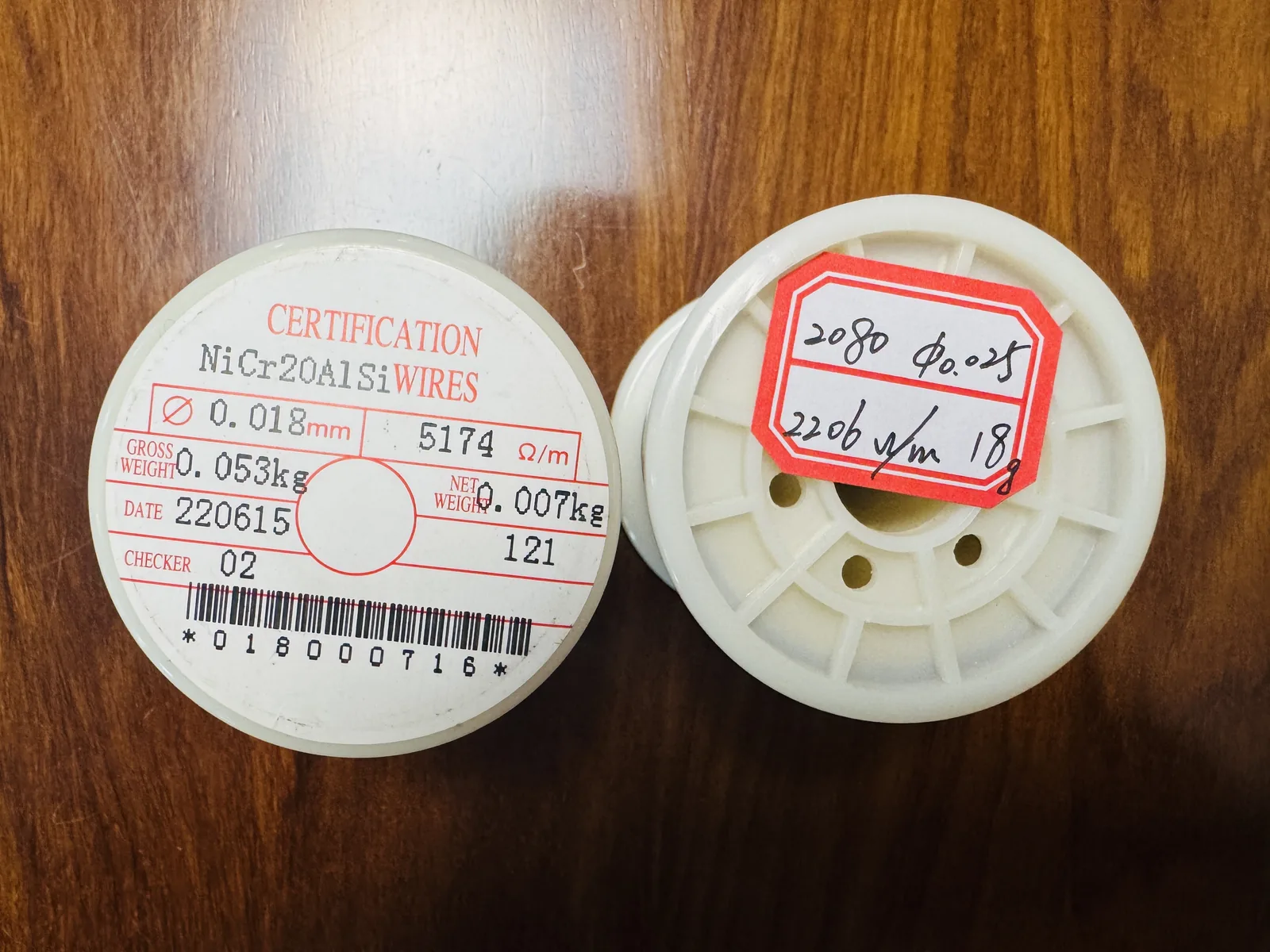
What the wire looks like
Fine wire, on the spool, with its label.
Two finished spools, and the labels that travel with them. The printed label on one spool records 0.018 mm; the red handwritten label on the next records 0.025 mm - the same NiCr20AlSi grade at two drawn sizes, each identified on its own spool.
Toll drawing
If you already hold the metal, send it.
Toll drawing is the alternative to buying our wire: you supply the rod or wire, we draw, anneal and test it to your specification and return the finished wire with its material certificate. You keep control of where the metal came from - we take responsibility for what it measures when it leaves the plant.
Lead time
What actually drives the 3 to 7 day range.
| Situation | Lead time | What drives it |
|---|---|---|
| Standard specification, stock grade | 3 - 7 days | Batch queue |
| Harder temper | Longer end of the range | More draw passes |
| Third-party test report required | Adds time | An external testing step, not paperwork |
| Non-standard diameter or special section | 7 - 15 days | Feasibility check, then a small trial before the production run |
Next step
Send the grade, diameter, temper and quantity.
Tell us what the wire has to do and the date your line needs it. We come back with a confirmed lead time, the achievable tolerance and the documents we can issue. Sample 100 g at cost; orders from 1 kg; production pricing from 5 kg.